
Compression Garments After a Facelift
Facelift surgery remains one of the most effective options for smoothing facial contours and tightening sagging skin. At Dr. Mark Plastic Surgery in Scottsdale, we take every step in the recovery process seriously because your results and comfort depend on them.
One of the most common questions from facelift patients centers on compression garments: how to wear them, when to wear them, and why they matter. In the sections below, you will find a complete guide on compression garments after a facelift, covering fit, duration, best practices, and answers to the questions our patients ask most.
Key Takeaways
How Compression Garments Support Facelift Recovery
Compression garments help your body heal naturally. Our surgical team recommends them to protect your results and provide comfort.
Why Compression Works
After facelift surgery, your tissues become sensitive and may swell. Compression wraps or garments gently hold surgical areas, which helps keep swelling under control and supports even healing. Many patients notice less bruising when following their garment schedule closely.
This layer of gentle pressure also helps your skin adjust to its new position, which can improve the contours of your face and neck as you recover. Compression helps keep pockets of fluid (called seromas) from forming under the skin.
Key Functions of a Post-Facelift Garment
Several crucial benefits come from wearing your compression garment as directed:
- Reducing Swelling: Steady, gentle pressure limits swelling, especially in the critical early days after surgery.
- Minimizing Bruising: Compression decreases the movement of blood under the skin, so bruises tend to fade faster.
- Supporting Tissues: The garment supports your skin as it heals, which can help with long-term results.
- Protecting Incisions: Compression limits unintentional stretching or pulling at incision sites.
By using your garment correctly, you support the work already completed in surgery and set yourself up for a smoother, more comfortable recovery.
Choosing the Right Compression Garment for Your Facelift
Selecting the correct garment involves both fit and material. At Dr. Mark Plastic Surgery, we match each patient with a garment best suited for their goals and comfort.
What to Look For in Fit and Feel
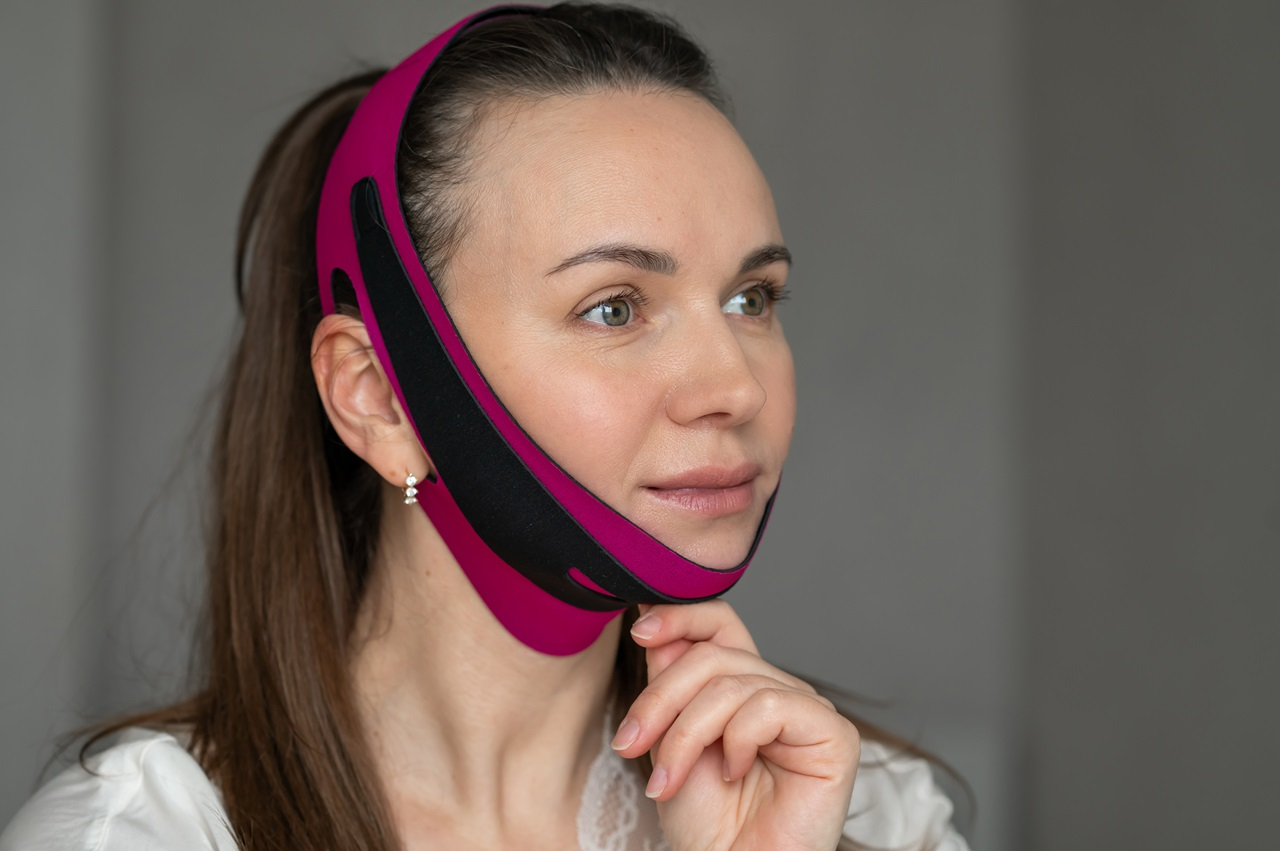
A well-made compression garment fits snugly to your face and neck, but it will never feel painfully tight. The right fit feels secure, not restrictive. Your skin should not crease or develop sores underneath. If your skin changes color, you may need an adjustment.
Most garments use a soft, stretchy fabric. Some include adjustable straps or fasteners so you can put them on or remove them without help. If you ever feel pain or a pins-and-needles sensation, please let our office know at once.
Sizing and Adjustment
Our team carefully measures your face and neck before surgery to select the best size. In some cases, patients end up needing a smaller size as swelling decreases. Secure fasteners should never dig into your skin, and seams must sit flat.
We recommend trying the garment on in the office before surgery. This short “practice run” helps you know what to expect postoperatively.
How Long to Wear the Garment: Timing and Milestones
Wearing your compression garment for the right amount of time supports your best possible results. Each recovery plan is unique, but most patients can use the following as a general guideline.
Immediate Postoperative Period
You should keep your garment on day and night (except for brief breaks) during the first seven days after surgery. This constant support keeps post-facelift discomfort in check.
Early Healing: The First Two to Three Weeks
Our surgeon will let you know when you can reduce your garment-wearing time. Most patients continue to use the compression garment at night and part of the day for the next 14 to 21 days. During this phase, the garment does not need to stay on as much as during the first week.
Late Recovery: Transitioning Off the Garment
By week four, the majority of swelling has improved. Many patients no longer need a garment after the 28-day mark. The decision depends on your individual healing and the surgeon’s exam. Always follow instructions closely if told to continue beyond this period.
At every stage, our Scottsdale practice will check your progress. If your skin heals especially quickly or slowly, we may adapt your timeline.

Care and Maintenance of Your Compression Garment
A clean, well-cared-for garment helps prevent complications and keeps your skin healthy.
Cleaning Recommendations
You should clean your compression garment regularly with mild detergent and cool water. Avoid harsh chemicals or very hot water, which may damage the elastic fibers. Most patients need to wash the garment at least every other day in the first week of recovery.
We suggest purchasing a second garment or using the spare provided by our office, making it easy to rotate between clean and dry items.
Skin Health Under Your Garment
Keep your skin dry and smooth under the garment. After washing your face, pat it completely dry before putting the garment back on. Watch for rashes, redness, or blisters. If you notice skin irritation, call our office right away.
Wearing jewelry or using harsh skin products under the garment can increase the risk of irritation. Stick to gentle cleansers and skip thick creams during your recovery.
Key Best Practices for Success
Proper use of your compression garment does more than affect comfort. The following best practices help maximize healing.
The practices below address the day-to-day adjustments needed during recovery.
- Follow all written instructions: Our team provides detailed aftercare steps tailored to your surgery and needs.
- Keep your head elevated: Elevating your head while resting or sleeping improves circulation and reduces swelling.
- Limit physical activity: Strenuous activity can shift swelling or affect healing, so knowing when to safely resume exercise after a facelift is critical, especially during the first two weeks.
- Remove garment only as instructed: Remove the garment for a quick shower or when our surgeon advises, then replace it immediately.
- Watch for warning signs: Severe pain, numbness, or skin color changes may mean the garment fits incorrectly or signals an issue.
When you follow these guidelines, you create the best environment for your face and neck to heal comfortably and safely. The right approach makes a big difference for your final result.
Adjusting Your Routine During Garment Use
Compression garments temporarily change how you go about daily activities. Our patients often have questions about managing normal routines after a facelift.
Bathing and Skin Care
Most patients may shower after the first 24-48 hours, but only remove the garment when our surgeon allows. Use a gentle cleanser and never rub incision areas. Pat the skin dry before putting the garment back on.
Do not use heavy lotions or ointments unless prescribed. Your skin may feel dry under the garment, but most tightness fades quickly as you heal.
Sleeping Arrangements
Sleeping upright on two pillows (or a wedge pillow) helps swelling resolve faster. Avoid sleeping on your side or stomach, which may cause discomfort or shift the garment out of place.
If the garment feels too tight at night, contact our office. Do not alter or loosen straps at home without guidance from our surgical team.
Clothing and Appearance
Most compression garments stay hidden under shirts or scarves, though some swelling may be visible. Avoid wearing jewelry, hats, or turtlenecks that press against incision sites. Make-up should be avoided until your surgeon confirms that your incisions have healed.
During the support phase, simple wardrobe adjustments make daily life more comfortable.
By adjusting your routine and caring for your skin, you keep the focus on healing during these early weeks.
Possible Challenges and What to Do
Most patients adapt to their compression garments with few problems, but complications may occasionally arise. Our office can address any questions quickly so minor challenges do not become serious concerns.
Warning Signs to Watch For
Strong signs you should call our office include:
- Pain that does not improve: Intense pain or pressure could mean the garment is too tight or an issue with your healing.
- Numbness or tingling: Loss of sensation may signal a nerve problem or poor fit.
- Redness, rash, or sores: These can develop if the garment rubs or if skin stays damp for too long.
- Fever or chills: These symptoms may signal infection and need attention.
Most problems improve with a simple adjustment, but our surgeon always prefers to check sooner rather than later.
How Our Office Can Help
If you run into any concerns, our staff wants to address them right away. We can provide a replacement garment, re-fit your existing one, or perform a quick exam to check your progress.
Never attempt to alter your compression garment by cutting, re-sewing, or tying it differently. This could affect healing or invalidate future adjustments.
Open communication with your surgical team always leads to better outcomes
Long-Term Results: What Compression Garments Can and Cannot Do
Compression helps shape your surgical result and supports healthy tissue as you heal, but it cannot take the place of good surgical technique or long-term skin care.
Benefits You Can Expect
Regular use of your garment can improve your comfort in recovery and minimize swelling and bruising. Patients who use their garment properly often see their incisions settle more neatly, and overall facial contours look more refined as swelling resolves.
What Compression Cannot Change
A compression garment cannot prevent every kind of swelling, nor can it guarantee perfect symmetry or eliminate all signs of surgery immediately. Genetics, overall skin quality, and follow-up care also matter.
You still need to avoid tobacco, use sun protection, and stick to a healthy lifestyle after surgery for the best results.

Questions You Might Have About Facelift Compression Garments
At Dr. Mark Plastic Surgery, patients frequently ask about the practical side of compression garments after a facelift. Below, you will find clear answers to some of the most common issues.
The Importance of Facelift Aftercare and Support
Successful facelift recovery depends on good technique during surgery and following best practices during aftercare. Wearing your compression garment, keeping your skin clean, and watching for problems all matter.
Every patient at Dr. Mark Plastic Surgery receives custom aftercare instructions and support tailored to their needs. Our team monitors your healing every step of the way.
If you have questions about compression garments, incision care, or your recovery timeline, our Scottsdale office is here to help. Reach out to our staff to schedule a consultation, and we will guide you from your very first questions to your final, confident reveal.